
Premium Ceramic (Good)
Reliable Nano Ceramic protection. Available in 5%, 15%, 35%, 50% VLT.
- UV Protection
- 99%
- Heat Rejection
- Up to 70% IR
- Installer
- Polar Tint Certified
- Warranty
- Polar Tint Promise
Automotive window tint for Parker, Castle Rock, Lone Tree, Highlands Ranch, Castle Pines, Centennial, and southeast Denver Metro drivers — three climate-engineered ceramic grades, 99% UV across every tier, non-metallic and designed not to interfere with phone, GPS or keyless signals, offered in Colorado-legal shades. Installed at 10232 Progress Ln by certified Polar Tint Parker technicians — now open. Free quote, Polar Tint Promise.
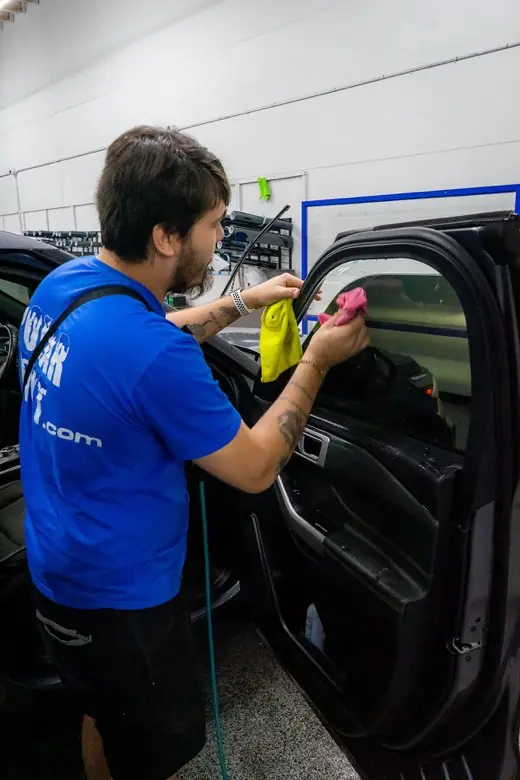
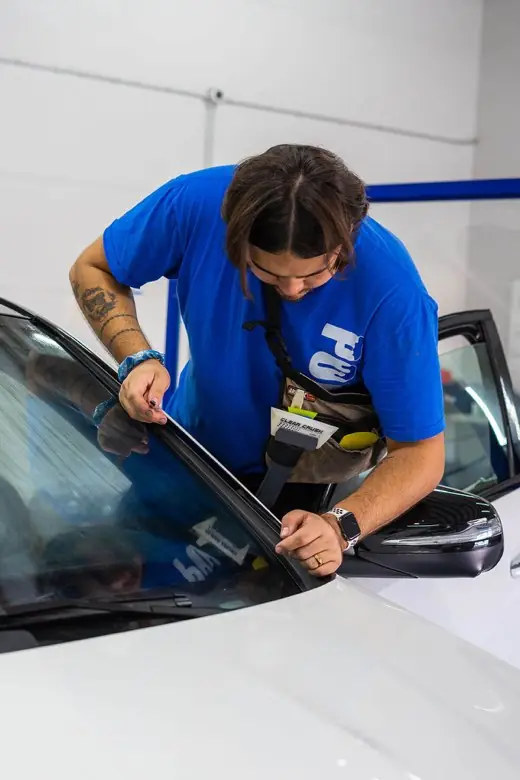
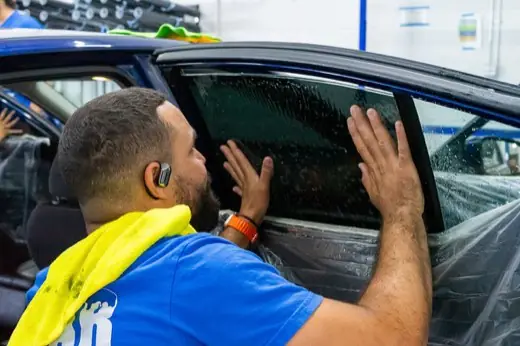
Every Polar Tint shop carries the same three Nano Ceramic grades. Same Polar Tint Promise on all three. The right pick depends on how hot it gets, how much heat you want rejected, and how dark you want to go. The 5% and 15% shades go only on the back side and rear windows, and only when the windshield and front side windows let in at least 70% (C.R.S. 42-4-227).
Reliable Nano Ceramic protection. Available in 5%, 15%, 35%, 50% VLT.
Enhanced heat rejection across five VLT options. 5%, 15%, 35%, 50%, 70% VLT.
Maximum heat rejection. The flagship for hot climates and daily commutes. 5%, 15%, 35%, 50%, 70% VLT.
Polar Tint Parker installs three Nano Ceramic grades on cars, trucks, SUVs, EVs, and exotics. Every grade is non-metallic, blocks 99% of UV, and comes in shades that meet Colorado’s 27% VLT front/rear-side rule. The only difference is how aggressively the film blocks infrared heat — and how cool the cabin feels in July at 5,800 feet of altitude.

Premium Ceramic is the entry-tier Nano Ceramic window tint in the Polar Tint catalog, and on its worst day it outperforms every dyed or carbon film on the market. It rejects up to 70% of infrared heat at the glass, blocks 99% of UV, and is color-stable.
There’s no purple-fade like cheap dyed film, the non-metallic film is designed not to interfere with phone, GPS or keyless signals the way old metallic film can, and it’s built not to bubble or peel in a Parker summer parking lot. It’s the right call if you commute under an hour a day on I-25 or Parker Road, garage the car most nights, and want a meaningful upgrade over factory glass without going to the very top of the lineup.
On a 95°F July afternoon in the Park Meadows lot, a Premium Ceramic cabin is likely to be noticeably cooler than a factory-glass cabin sitting in the same row, with the steering wheel and leather less likely to be too hot to touch.
The AC can catch up sooner instead of fighting all the way home. And because Premium Ceramic blocks 99% of UV, it helps keep the dashboard plastic from cracking and the leather from fading, which can help your vehicle’s resale value.
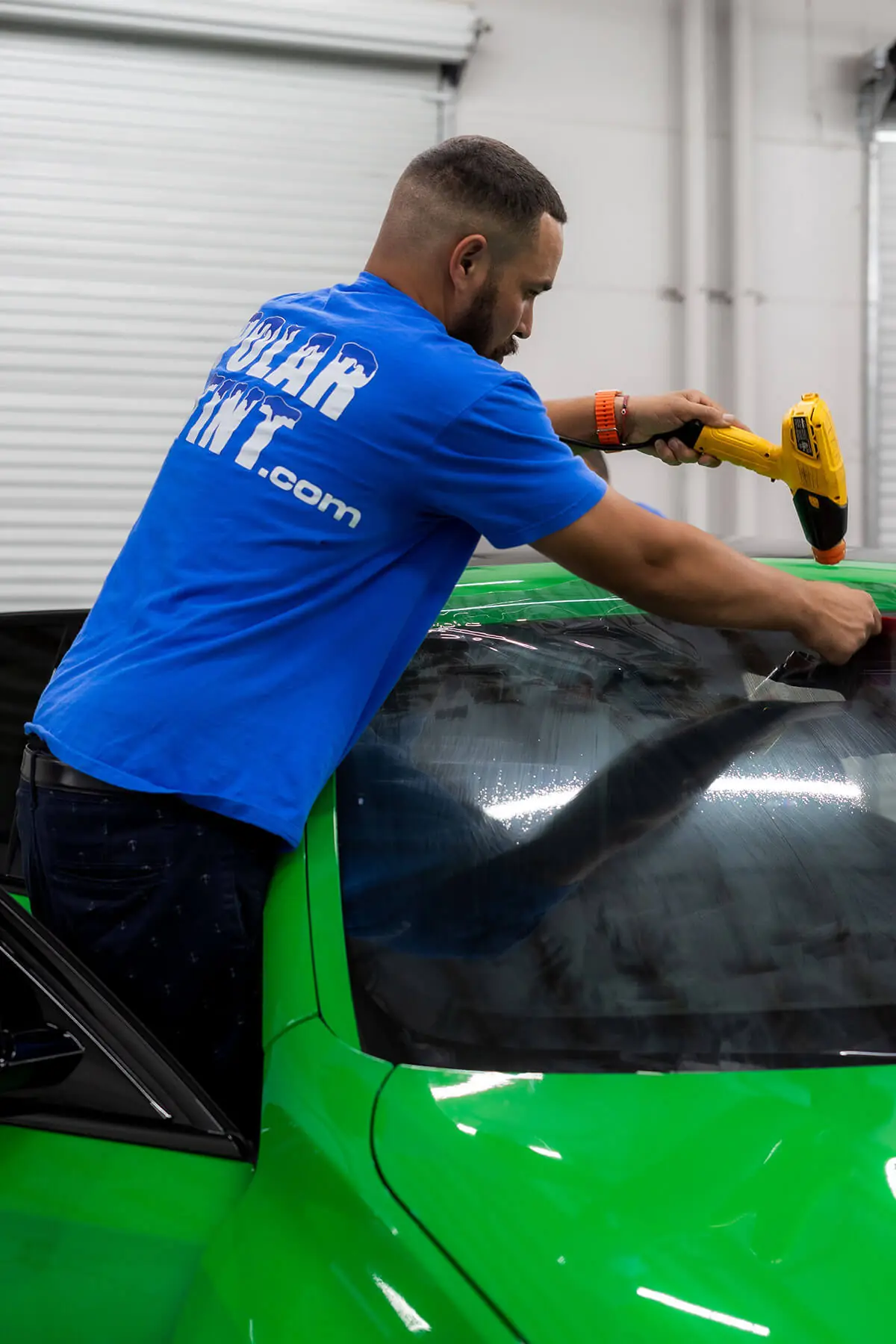
Ceramic Plus is the second of the three Nano Ceramic grades, and it’s where most Parker commuters and ski-trip families settle in. It rejects 90% of infrared heat on every shade — up from up to 70% on Premium Ceramic — while keeping the same 99% UV block, the same non-metallic construction designed not to interfere with signals, and the same shade options, with each window fitted within Colorado law once it’s measured with your factory glass.
If you spend more than 45 minutes a day in the car, drive west on I-70 to ski country on weekends, or park outside at work, this is the tier where the math really starts to work in your favor.
The practical difference at 90% IR is easy to feel. A black-on-black SUV that used to be unbearable at 4pm can cool down noticeably faster once the AC is running. On a long Sunday descent down I-70 from Loveland, the driver-side door is less likely to bake in the sun.
The kids in the back row stay more comfortable. And when you finally park the car in the Parker garage at the end of a 95° July day, the interior plastic and the screen are less likely to be hot to the touch, and the film helps slow the sun-fading that ages leather.
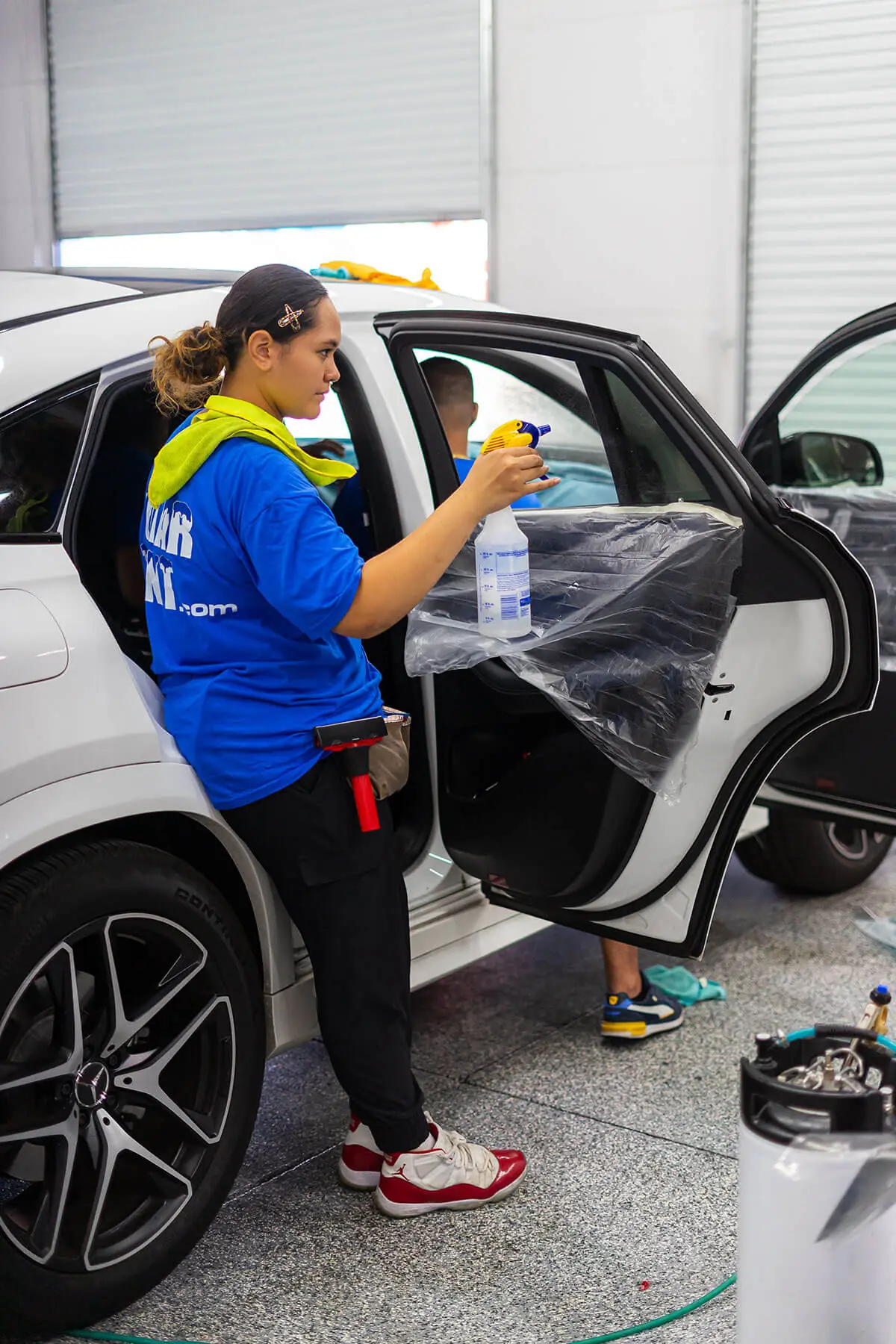
Ceramic Ultimate Plus is the top of the Polar Tint Nano Ceramic catalog and the highest-rejection automotive window film we install. It blocks 98% of infrared heat at the glass — the highest IR rejection number in the lineup — while staying optically pure and Colorado-law compliant in approved VLT shades, with a non-metallic build designed not to interfere with signals.
This is the tier we install on leased exotics, black-on-black luxury SUVs, family vehicles that live in the August sun, EVs where every degree of cabin cooling extends range, and any Parker driver who wants the cabin to cool down faster once the AC is running.
Moving from 90% to 98% IR can help the cabin get more comfortable sooner. A black Cybertruck, a Model X, a Rivian R1S, a Range Rover, an Escalade — vehicles that absorb heat aggressively and bake their interiors in the high-altitude Colorado sun — finally behave the way you’d expect a premium cabin to behave.
The leather ages more slowly. The dashboard is less likely to crack. The kids in the back row stop asking when the AC will catch up. Driving electric? See our guide to Tesla and EV window tint in Parker for why heat rejection eases the cabin cooling load on a battery. For model-by-model glass notes and Colorado shade rules, see our Tesla window tint in Parker, CO page.
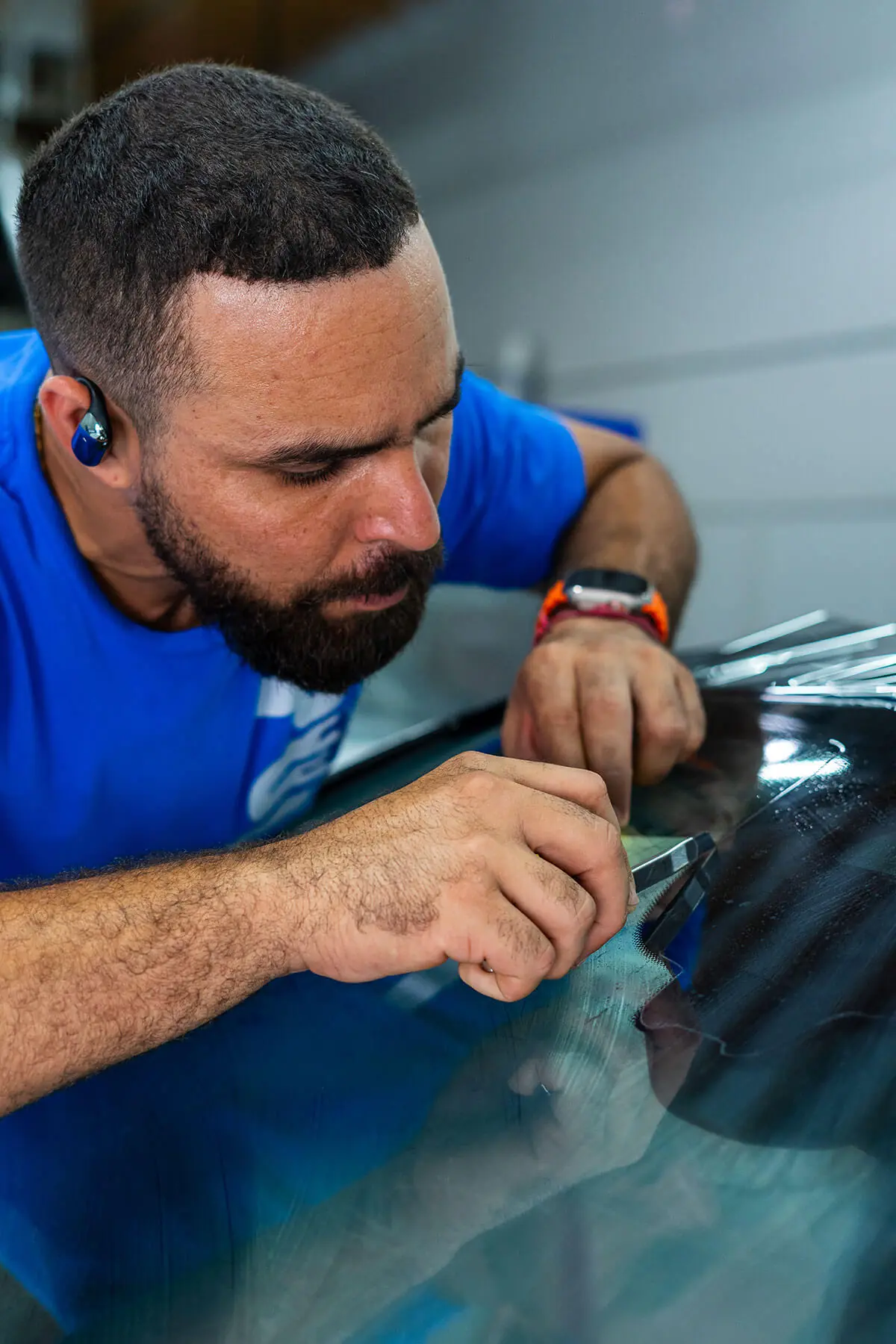
Polar Tint Parker only installs Nano Ceramic. We don’t stock dyed film, we don’t stock carbon, and we don’t stock metallic. Here’s why that’s the right call in Colorado. Dyed film can go purple fast in the Front Range sun — the dye breaks down under altitude UV and the windows start looking like cheap aftermarket.
Carbon film doesn’t fade as fast, but it has noticeably weaker infrared rejection — the cabin stays hot. Metallic film blocks heat well, but the metal layer interferes with cell signal, GPS, garage-door openers, toll transponders, and satellite radio — a non-starter for any modern vehicle, and a hard pass on any EV.
Nano Ceramic brings several strengths together: strong infrared rejection, a non-metallic film designed not to interfere with phone, GPS or keyless signals, and color-stable with no dye to purple. We stand behind your window film and our installation work with the Polar Tint Promise. The film also carries the manufacturer's lifetime warranty for the life of the vehicle.
It’s why the entire Polar Tint network — including Parker — runs ceramic-only and backs every install with the Polar Tint Promise. If the film fails, we replace it. If the install fails, we redo it.
Every Polar Tint Parker installer is certified and manufacturer-trained on the same Nano Ceramic playbook every Polar Tint location runs. No off-the-street installers on your vehicle.
We stand behind your window film, its adhesive, and our installation work with the Polar Tint Promise. If the film fades to purple, bubbles, peels, or the adhesive fails, the Polar Tint Promise covers it. The film also carries the manufacturer's lifetime warranty for the life of the vehicle.
Bring a written quote from any licensed local Parker tint shop for the same ceramic tier and same coverage. Polar Tint Parker matches it. The Polar Tint Promise still applies on top.
10232 Progress Ln — serving Parker, Castle Rock, Castle Pines, Lone Tree, Highlands Ranch, Centennial, Stonegate, Pinery, Stroh Ranch, Idyllwilde, and southeast Denver Metro. Drive in, get a written quote, install on your timeline.
The same certified team that tints your vehicle installs window film on Parker homes and offices too — on-site, not in the shop. If you came here for automotive tint, here’s the rest of what Polar Tint Parker covers.
Heat-rejection, security (anti-shatter), privacy/decorative, and low-E insulating film for Parker-area homes — installed on-site with a free in-home consult and the Polar Tint Promise. See residential window film.
Solar, security/anti-shatter, anti-graffiti, and decorative/privacy frost film for Parker-area offices, retail, and storefronts — installed on-site, including multi-site rollouts. See commercial window film.
Polar Tint Parker quotes automotive ceramic window tint in person, at the shop or over the phone. We walk the vehicle with you, recommend the right ceramic grade, and give you a written number before you sign anything.
Call (720) 954-2853 or send a message to book a quote at a time that works for you.
A certified Polar Tint Parker installer walks every window of your vehicle with you, talks through the three ceramic grades, and recommends the right tier for the way you drive in Colorado.
You get a full written quote, scope, install date, and warranty terms. You decide. The Polar Tint Promise applies to whatever you choose.
Want to see what happens in the bay? Read the full window tint installation process — glass prep, film fitting, quality checks, and cure-time care. Have old film to take off first? See the window tint removal process.
Polar Tint Parker is a window tint shop at 10232 Progress Ln, Parker, CO 80134, open 7 days a week, 8am to 5pm. Automotive tint is installed in the shop’s indoor bay, you get a free written quote before anything is scheduled, and every window tint install is backed by the Polar Tint Promise.
10232 Progress Ln, Parker, CO 80134. Open in Google Maps.
Open 7 days, 8am – 5pm. Call (720) 954-2853, send a message, or walk in to book a free consult.
A certified installer looks at your glass with you, talks through Premium Ceramic, Ceramic Plus and Ceramic Ultimate Plus, and helps you pick a legal shade.
You get a written quote with the grade, coverage and install time before anything is scheduled. You decide.
The glass is cleaned, the film is cut to your vehicle and applied, the edges are finished, and every window gets a quality-control check. Routine automotive installs don’t need an overnight drop-off.
You can drive away right after the install. Keep the windows up for 3 to 5 days while the film cures.
Comparing grades first? See ceramic window tint in Parker, or read the full installation process.
Short version: a "98% IR rejection" number is not the same as blocking 98% of the sun's heat. Here is the honest breakdown so you can compare ceramic films like a pro.
The sunlight hitting your car on the Front Range is roughly 53% infrared (IR — the radiant heat you feel on your arm), 44% visible light, and 3% ultraviolet (UV). Three different numbers describe three different things, and tint marketing loves to blur them.
VLT (Visible Light Transmission) is only how dark the film looks — it says nothing about heat. UV rejection is the share of ultraviolet blocked; every Polar Tint ceramic grade blocks 99% of UV, which matters a lot here because thinner air at roughly 5,800 feet lets noticeably more UV through than at sea level.
IR rejection is the share of infrared stopped at the measured wavelengths — Polar Tint grades hit up to 70%, 90%, and 98%. But IR is only part of the sun's energy, so that headline can't mean "98% of all heat."
The one number that captures the whole picture is TSER — Total Solar Energy Rejected — the percentage of the entire solar spectrum (UV + visible + IR together) a film rejects. Because it includes everything, TSER is usually lower than the IR figure, and it is the only true apples-to-apples heat comparison between films.
We don't slap an inflated TSER on a banner — at your free Polar Tint Parker estimate we'll give you the exact TSER for the grade and shade you pick, so your choice fits Parker's high-altitude sun and big day-to-night temperature swings.
Quick answer: Colorado requires at least 27% VLT on the front side windows and at least 27% on the back side windows and rear window, unless the windshield and front side windows let in at least 70%, in which case the windows behind the driver may be darker. On the windshield, only a non-reflective tint strip on the top 4 inches is allowed.
Polar Tint Parker installs Colorado-legal shades on every job and shows you exactly what's allowed for your vehicle before any film goes on.
If a brighter cabin isn't an option for you medically, Colorado's tint statute (C.R.S. 42-4-227) contains no medical-exemption pathway — the 27% VLT limit applies to every driver, and there is no permit to apply for.
If sunlight is a medical concern, we'll help you pick the darkest Colorado-legal grade for your build, and every tier still blocks 99% of UV. Tint rules change, so it's always worth verifying current law with the Colorado DMV before installation.
Here's the part most Parker drivers miss. Front Range elevation means a thinner atmosphere and a stronger solar load than you'd feel at sea level, so the sun coming through legal-shade glass still carries real UV and infrared heat. That's why the shade percentage isn't the whole story up here.
Every Polar Tint film blocks 99% of UV and rejects infrared heat, so even a light, fully Colorado-legal tint helps protect your skin and interior and helps keep the cabin cooler. You don't have to go dark to get serious protection at altitude.
That's why Polar Tint installs non-metallic Nano Ceramic film only, in three grades:
Every grade blocks 99% of UV rays, and because the film is non-metallic, it is designed not to interfere with phone, GPS, or keyless signals. Every install is backed by the Polar Tint Promise. Pricing is quoted locally — ask Polar Tint Parker for a free estimate.
This lookup is kept current by SalesThumb. Pick your vehicle to see today’s limits for Colorado. For the full rules, read the Colorado window tint law guide.
Ceramic film rejects infrared heat at the glass. Black-leather steering wheel and seats don’t scorch as badly in the August parking lot.
Altitude UV at 5,800+ ft is meaningfully stronger than at sea level. Skin Cancer Foundation Recommended film blocks it before it reaches you.
Front Range snow-glare in winter and low-angle Colorado sun in summer are easier to handle. Safer driving on I-25, E-470, and Parker Road.
Non-metallic Nano Ceramic. Designed not to interfere with cell, GPS, garage-door, toll-transponder, or satellite-radio signals.
Helps keep dashboards from cracking and leather from fading, which can help resale value.
We stand behind your window film and our installation work with the Polar Tint Promise. The film also carries the manufacturer's lifetime warranty for the life of the vehicle.
Polar Tint Parker tints cars, trucks and SUVs in-shop at 10232 Progress Ln, Parker, CO 80134. Choose Premium Ceramic (up to 70% IR), Ceramic Plus (90% IR) or Ceramic Ultimate Plus (98% IR); every grade blocks 99% UV. Colorado front side windows must let in at least 27% of light. Free written quote.
Polar Tint Parker installs Nano Ceramic automotive window tint in three Colorado-tuned grades. Premium Ceramic (Good) rejects up to 70% of infrared heat with 99% UV — the daily-driver baseline that beats every dyed and carbon film on the market. Ceramic Plus (Better) rejects 90% IR with 99% UV — the right pick for commuters spending an hour a day on I-25 or E-470.
Ceramic Ultimate Plus (Best) is the 98% IR flagship — the highest heat rejection in the Polar Tint catalog, engineered for black interiors, leased exotics, family SUVs left in summer parking lots, and anyone who wants the cabin to cool down faster once the AC is running. All three are designed not to interfere with phone, GPS or keyless signals, comply with Colorado window tint law, and are backed by the Polar Tint Promise. Free quote — call (720) 954-2853.
Polar Tint Parker installs Nano Ceramic automotive window tint, ceramic window film, IR-rejecting tint, tint designed not to interfere with signals, Colorado-law-compliant tint, and Skin Cancer Foundation Recommended UV-blocking tint on cars, trucks, SUVs, EVs, and exotics across Parker, Castle Rock, Castle Pines, Lone Tree, Highlands Ranch, Centennial, Stonegate, Pinery, Cottonwood, Stroh Ranch, Idyllwilde, Cherry Creek, Aurora South, southeast Denver Metro, and the Front Range corridor.
The shop based at 10232 Progress Ln serves I-25 commuters, E-470 toll-loop drivers, I-70 weekend skiers, EV daily-drivers, family SUVs, leased exotics, and work trucks. Free quote. Polar Tint Promise. Call (720) 954-2853.
Call (720) 954-2853, send a message, or fill out the form. The Polar Tint Parker team responds same business day.
Polar Tint Parker books ceramic tint quotes by phone, message, or walk-in at 10232 Progress Ln. Call (720) 954-2853 or request a quote online — same-business-day response.